
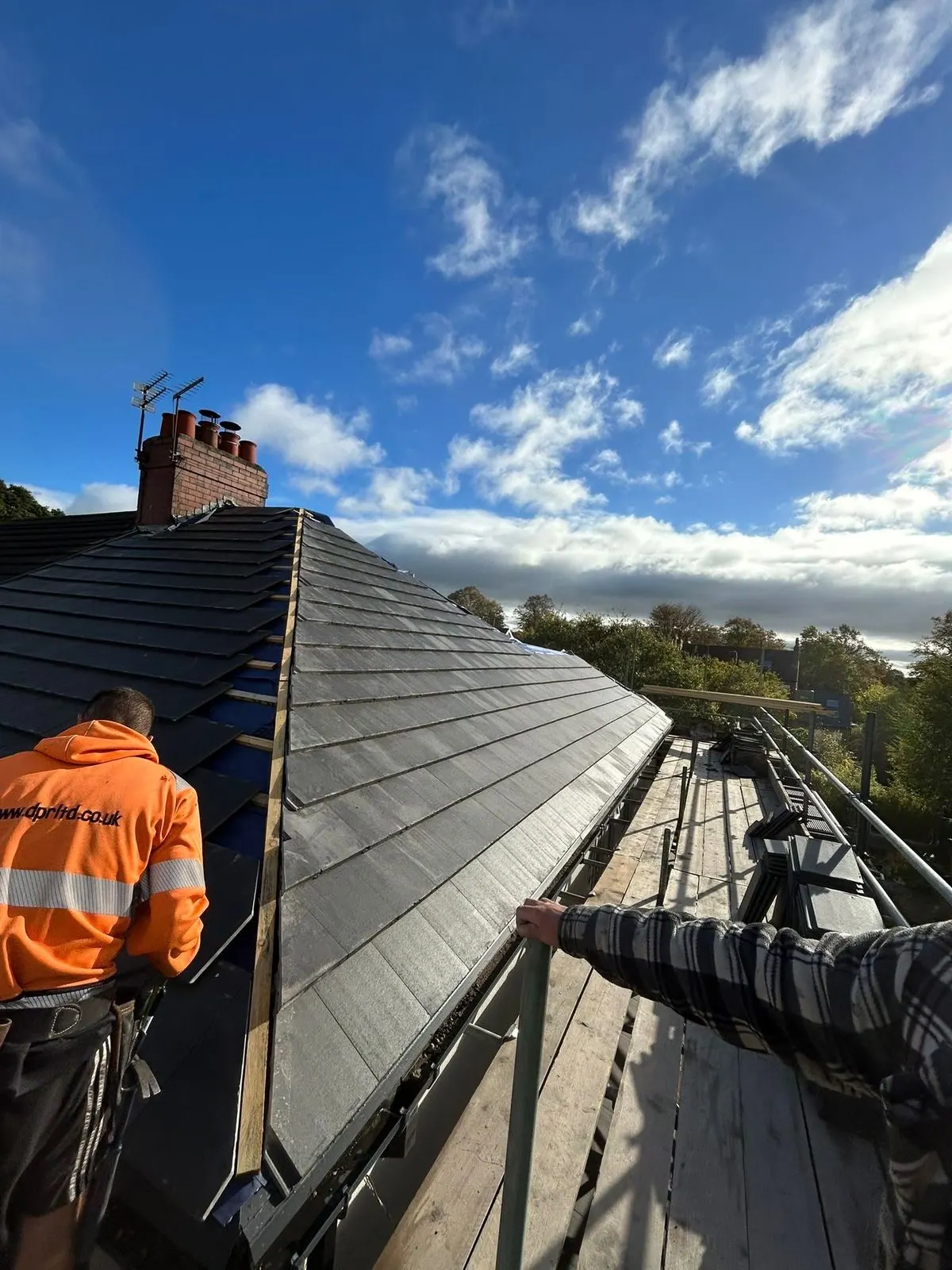
A single cracked or slipped tile can let water into the roof for months before you see a stain on the ceiling, so it’s worth fixing quickly. This guide explains how roofers repair the most common problems on tiled and slate roofs, and the ridge and verge mortar around them.
Why roof tiles crack and slip
- Wind. Strong gusts can lift tiles, especially at the edges of the roof, and drop them back out of place.
- Rusted or failed nails. On older roofs, the nails holding tiles and slates corrode over time and the tile slides down.
- Rotten battens. If the timber battens the tiles hang on have rotted, the tiles have nothing to grip.
- Frost. Water soaked into older clay or concrete tiles freezes and expands, which cracks and flakes them.
- Foot traffic. People walking on the roof, for example to fit an aerial or a satellite dish, can crack tiles.
- Age. Concrete tiles become porous and brittle after many decades, and some old tiles simply reach the end of their life.
How a broken roof tile is replaced
Most modern roof tiles hang on horizontal timber battens by small lugs, called nibs, on the back. Many are also nailed or clipped in place. To replace one, a roofer will usually:
- Set up safe access, with a ladder and roof ladder for a small job, or scaffolding or a cherry picker for higher roofs.
- Gently lift the tiles in the course above with wedges, to free the broken tile.
- Remove the broken tile, using a slate ripper to cut any nails that are holding it.
- Check the battens and the felt or membrane underneath, and repair them if they’re damaged.
- Slide in a matching tile so its nibs hook over the batten, then fix it with a tile clip or other fixing where needed.
- Lower the tiles above back into place and check that everything sits flat.
Finding a matching tile matters. Many older Leeds roofs use tiles that are no longer made, so roofers often keep a stock of reclaimed tiles to get the closest match.
How a slipped slate is refixed
Slates are fixed with nails through holes near the top or middle, so once the nails fail, you can’t nail a replacement back in the normal way without lifting the slates above it. Instead, a roofer:
- Removes the slipped or broken slate, cutting the old nails with a slate ripper.
- Fixes a metal slate hook, or a strip of lead or copper called a tingle, to the batten between the slates below.
- Slides the new or refitted slate up into position, and bends the hook or tingle up to hold its bottom edge.
If lots of slates are slipping across the roof, it usually means the nails are failing everywhere, which is known as nail fatigue. Repairing slates one at a time then becomes a losing battle, and stripping and re-slating that area, or the whole roof, is better value. Our slate roofing page explains more.
Repairing ridge and verge mortar
On many roofs, the ridge tiles along the top and the edges at the gable ends, called verges, are bedded in mortar. Over time the mortar cracks and falls out, which lets water in and can leave ridge tiles loose enough to blow off.
- Repointing fills the gaps with fresh mortar where the bedding is mostly sound.
- Re-bedding means lifting the ridge tiles, clearing the old mortar and laying them back on a fresh mortar bed.
- Dry ridge and dry verge systems fix the tiles mechanically with clips and screws instead of mortar, which needs much less maintenance.
Why sealant isn’t a proper repair
You’ll find advice online about filling a cracked tile with roofing cement, sealant or a patch of flashing tape. It can keep water out for a while in an emergency, but it doesn’t last: the sealant shrinks and peels in the sun and frost, and it can trap water under the tile. It also makes the tile harder to replace properly later. Treat it as a stopgap until the tile can be replaced.
Should you repair a roof tile yourself?
We’d advise against it. Falls from roofs and ladders are one of the most common causes of serious injury at home, and a roof that looks easy from the ground is steep and slippery up close. Walking on the roof can also crack more tiles than you fix.
What you can safely do from the ground or inside:
- Look for slipped, cracked or missing tiles with binoculars
- Check the loft after heavy rain for daylight, damp timber or wet insulation
- Put a bucket under any drip and move belongings out of the way
Our guide on how to find a leak in your roof explains what to check, and the five steps to take when your roof is leaking covers what to do first.
How much does a roof tile repair cost?
Small roof repairs, such as replacing a few tiles or refixing slipped slates, start from around £150 with DPR. The price depends on how many tiles are affected, how easy the roof is to reach, and whether access equipment is needed. Our repairs come with a 1-year workmanship guarantee, and new parts can carry warranties of up to 5 years.
If damage is widespread, a repair may not be the best value. Our guide to replacement roof costs explains when a new roof makes more sense.
Get a roof tile repaired in Leeds
We repair tiled and slate roofs across Leeds and West Yorkshire, and have done since 1989. Find out more about our roof repairs and tiled roofing services, or if water is already coming in, our emergency roof repairs.
Call us on 0113 335 0043 or send us your details.