
A dripping gutter joint looks like a small problem, but water running down the same spot of wall for months can stain the brickwork, wash out mortar, and lead to damp inside. This guide explains why gutter joints leak and how they’re repaired on the two most common types of guttering.
Why gutter joints leak
- Dirt and debris. Leaves, moss and silt build up at the joint and hold water against the seal, or push the gutter sections apart.
- Perished seals. The rubber seals in plastic gutter unions harden, crack and shrink with age and sunlight.
- Movement. Plastic guttering expands and contracts with the temperature. If the sections weren’t fitted to the marks on the union, they can pull out of the seal.
- Sagging. A loose or broken bracket lets the gutter drop, which opens up the joint and lets water pool there.
- Old sealant. On cast iron gutters, the sealant in the joint dries out and cracks, and the bolts rust.
Before fixing the joint itself, clear the gutter and run some water through it. If water collects at the joint rather than flowing towards the downpipe, the gutter’s slope is the real problem. Our guide on the correct slope for gutters explains what it should be.
A word on safety
Working on a ladder at gutter height is riskier than most people think. Use a sound ladder at the right angle, on firm, level ground, with someone footing it, and a stand-off bracket so the ladder doesn’t rest on the gutter. Never lean out to reach. If the gutter is above the first floor, over a conservatory, or the ground underneath isn’t level, leave it to a professional with proper access equipment.
Repairing a leaking plastic (PVC) gutter joint
Most modern houses have PVC guttering. The sections are joined by a union bracket, a short connector with rubber seals that the gutter clips into.
- Clean the joint. Clear out leaves and silt, and wipe the seal and gutter ends clean. Sometimes this alone stops the leak.
- Unclip the gutter. Squeeze the front edge of the gutter and ease it out from under the clips on the union.
- Check the seal. If the rubber seal is cracked, flattened or missing, replace it, or, more simply, replace the whole union bracket. Take the old one with you, as unions are made to fit each brand’s gutter profile, and different makes don’t always fit together.
- Refit to the marks. Most unions have insertion marks. Push each gutter section in only as far as the mark, which leaves room for the plastic to expand in warm weather.
- Clip it back in. Make sure the gutter is fully seated under the front and back clips, then run water through to test it.
Sealant on a plastic gutter joint is only a temporary fix. It doesn’t grip PVC well, and the movement of the gutter soon breaks the seal.
Repairing a leaking cast iron gutter joint
Older and period properties often have cast iron guttering, where sections overlap and are bolted together through a joint packed with sealant.
- Undo the bolt. Older bolts are often rusted solid, so you may need to cut through them with a small hacksaw and tap out the stub.
- Separate the sections. Ease the joint apart gently. Cast iron is heavy and brittle, so it can crack if it’s forced.
- Clean it back. Scrape out the old sealant and wire brush the rust off both surfaces.
- Prime it. Apply a metal primer to the bare metal and let it dry.
- Reseal it. Apply a bead of gutter sealant suitable for metal, bring the joint back together, and fit a new galvanised or stainless nut and bolt.
- Protect it. Once the sealant has set, paint the gutter to stop the rust coming back.
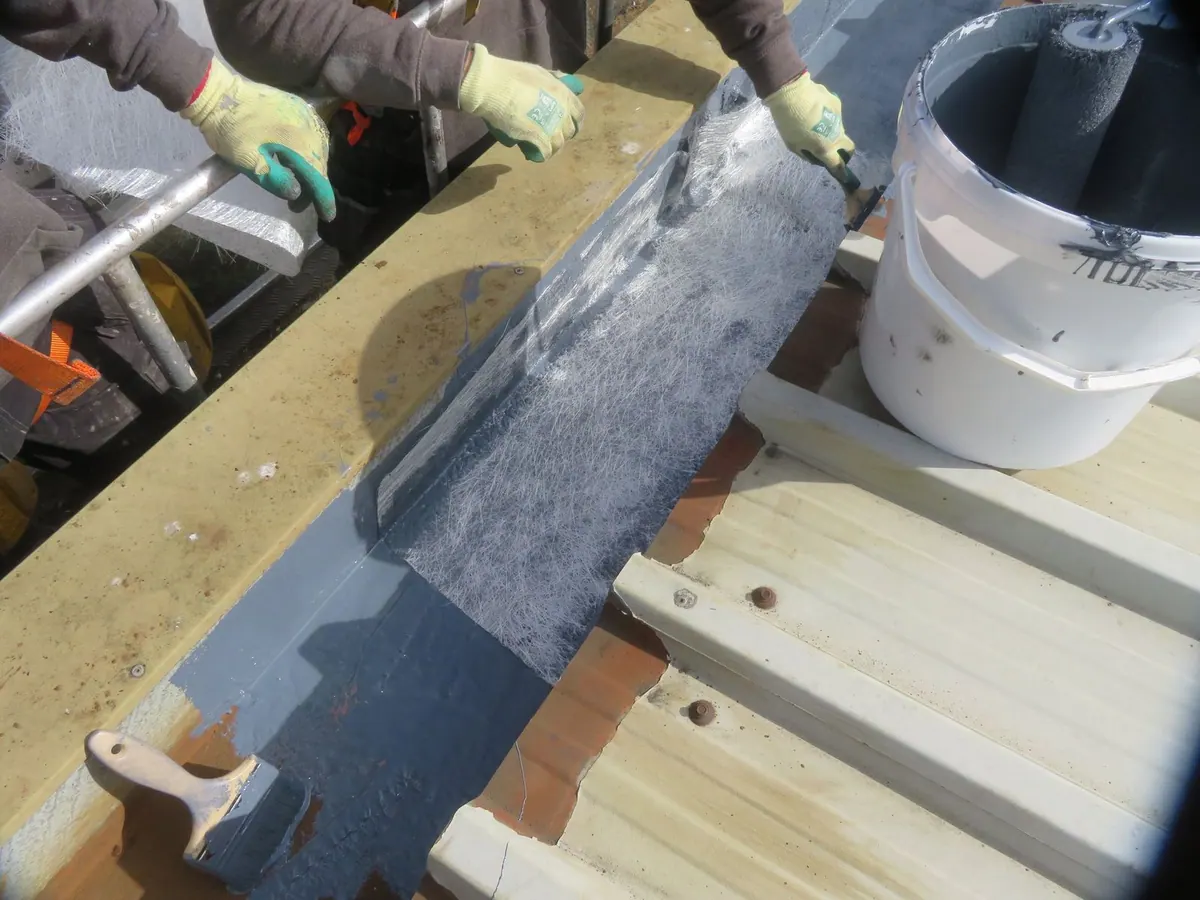
Cast iron sections are heavy, so this is a job for two people. If the gutter is badly corroded, a GRP or specialist lining can be used to seal it without replacing it.
Aluminium and seamless gutters
Sectional aluminium gutters are repaired in a similar way to cast iron, with the joint cleaned and resealed. Seamless aluminium gutters have no joints along the run, so leaks usually come from the corners, end caps or outlets, which can be resealed.
When to replace instead of repair
Repairing a joint makes sense when the rest of the gutter is sound. If the gutter leaks at several joints, has cracked or brittle sections, sags along its length, or is falling away from rotten fascia boards, replacing the run is better value. Our gutter installation page explains the options, and our post on the benefits of PVC guttering compares materials.
Keep gutter joints from leaking
- Clear the gutters at least once a year, and more often if there are trees nearby. See how often you should clean your gutters.
- Check for drips at the joints during heavy rain.
- Look for loose or missing brackets, and get them fixed before the gutter sags.
Gutter repairs in Leeds
If you’d rather not go up the ladder, or the leak keeps coming back, we repair plastic, cast iron and commercial guttering across Leeds and West Yorkshire, using access platforms where needed. Find out more about our gutter repairs and gutter cleaning services, or our commercial guttering service for business premises.
Call us on 0113 335 0043 or send us your details.